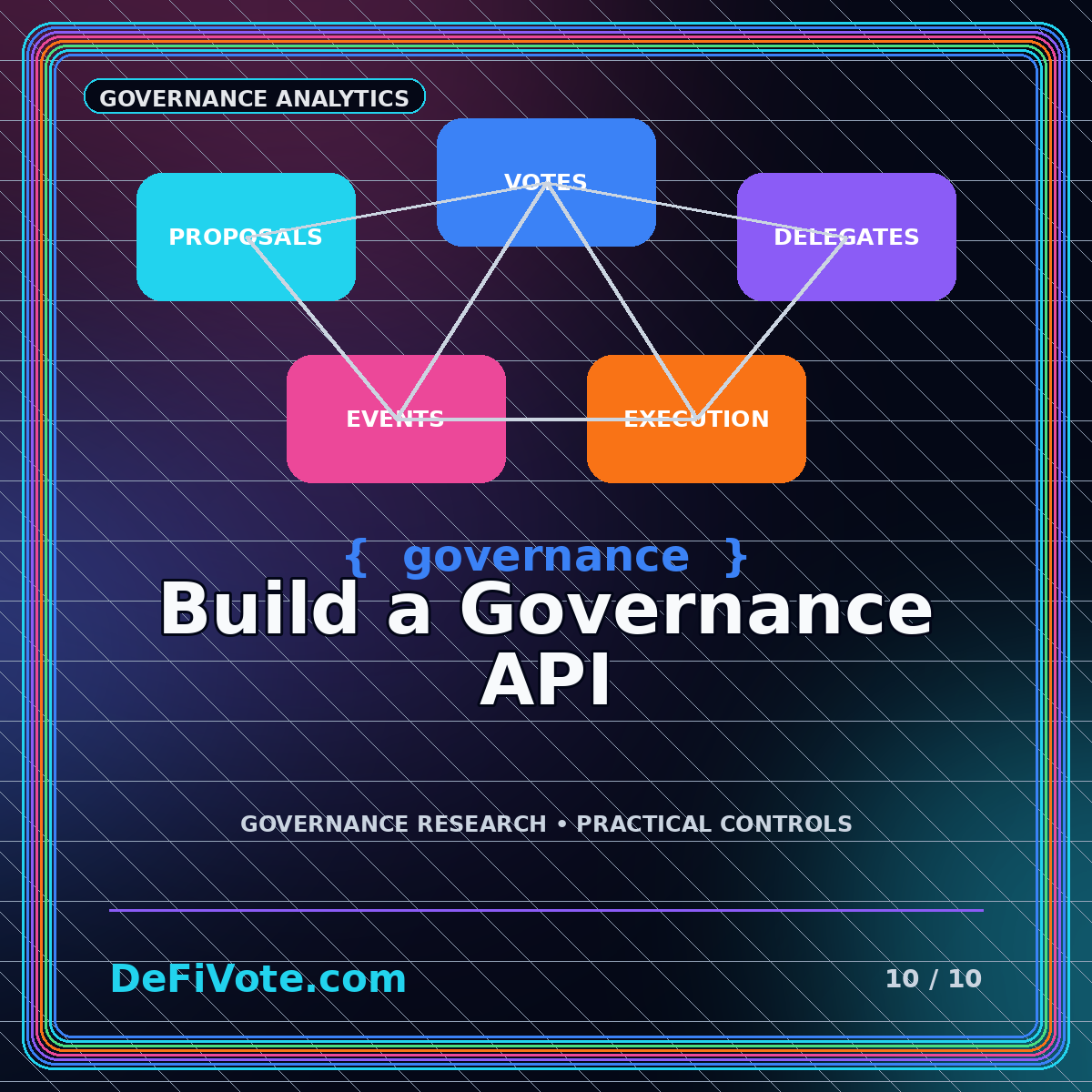
Building a Governance API: Data Models, Events, and Integration Patterns
Design a reliable governance data layer for organizations, proposals, votes, delegates, executions, notifications, and analytics.
Read article →
Ten complete guides to governance fundamentals, voting systems, delegation, security, treasury operations, analytics, network governance, and API design.
Design a reliable governance data layer for organizations, proposals, votes, delegates, executions, notifications, and analytics.
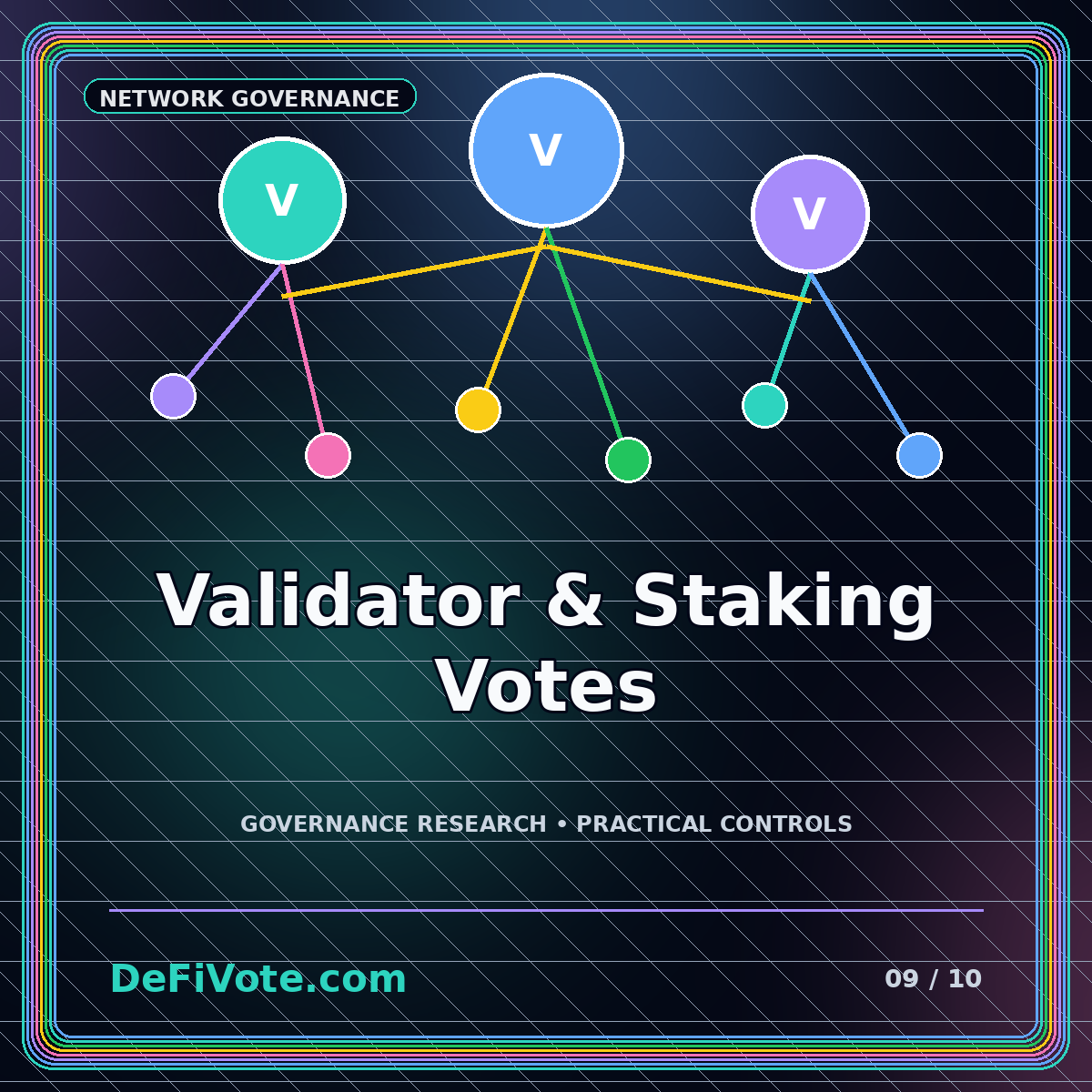
Understand how validators, delegators, staking weight, proposal deposits, vote inheritance, and upgrades interact in network governance.

Build a governance dashboard that measures participation, concentration, proposal quality, execution, and representative accountability.
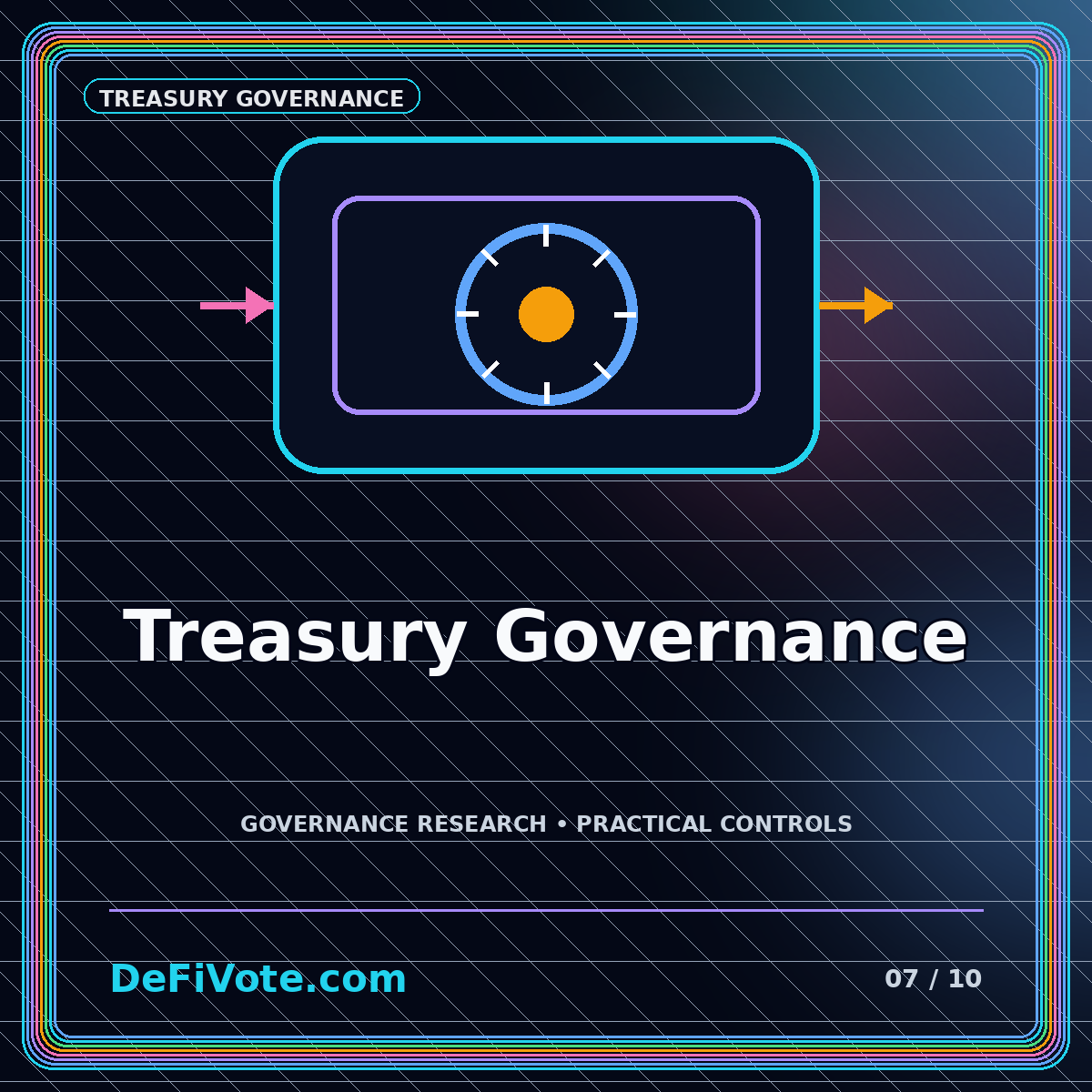
Design a treasury process that connects budgets, proposal review, authorization, multisig execution, milestones, and public reporting.
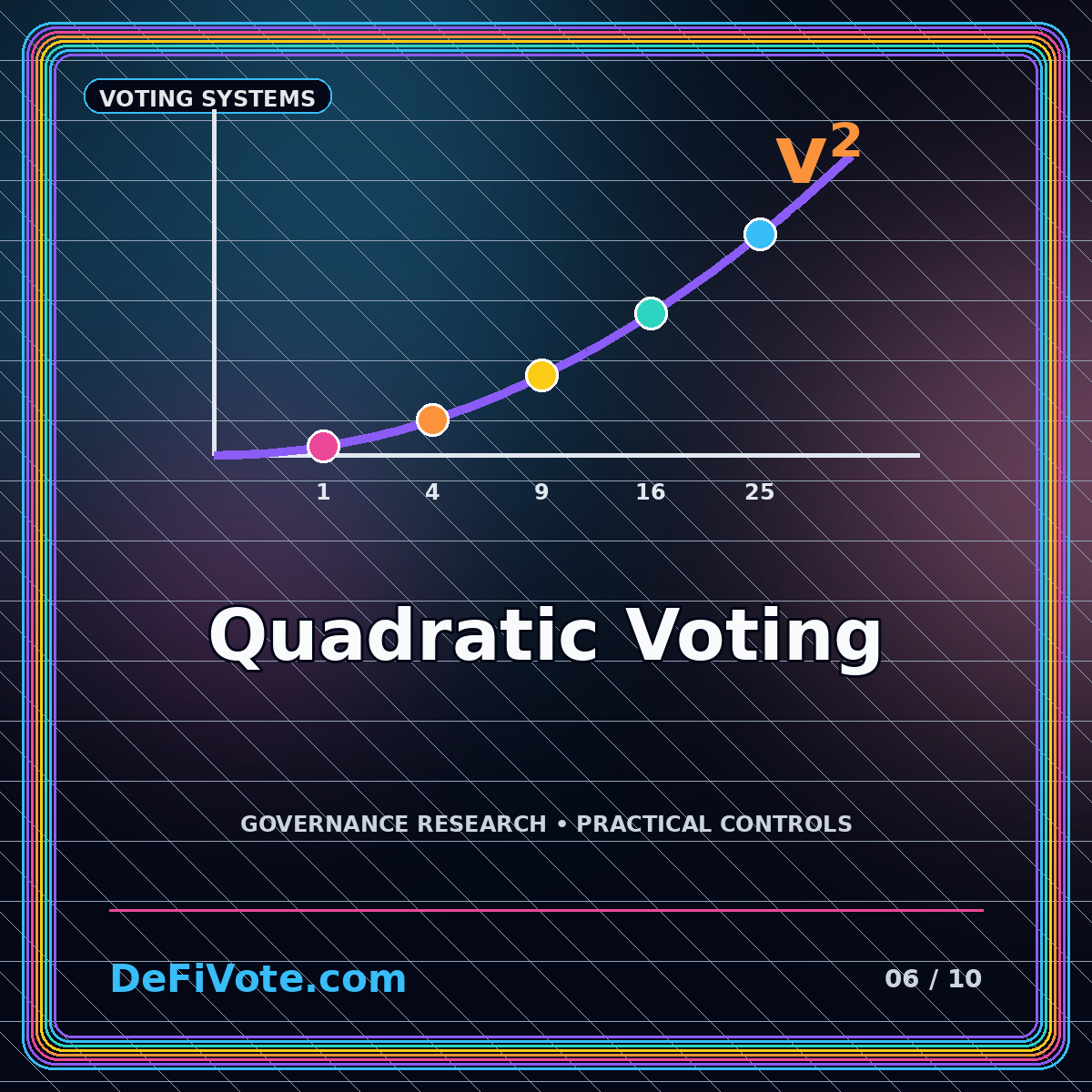
See how quadratic vote costs express preference intensity, where the mechanism helps, and why identity and collusion remain hard problems.
Learn how delegation can expand participation while preserving revocability, transparency, accountability, and token-holder control.
Map the economic, procedural, technical, and execution risks that can turn a legitimate-looking DAO vote into a protocol compromise.
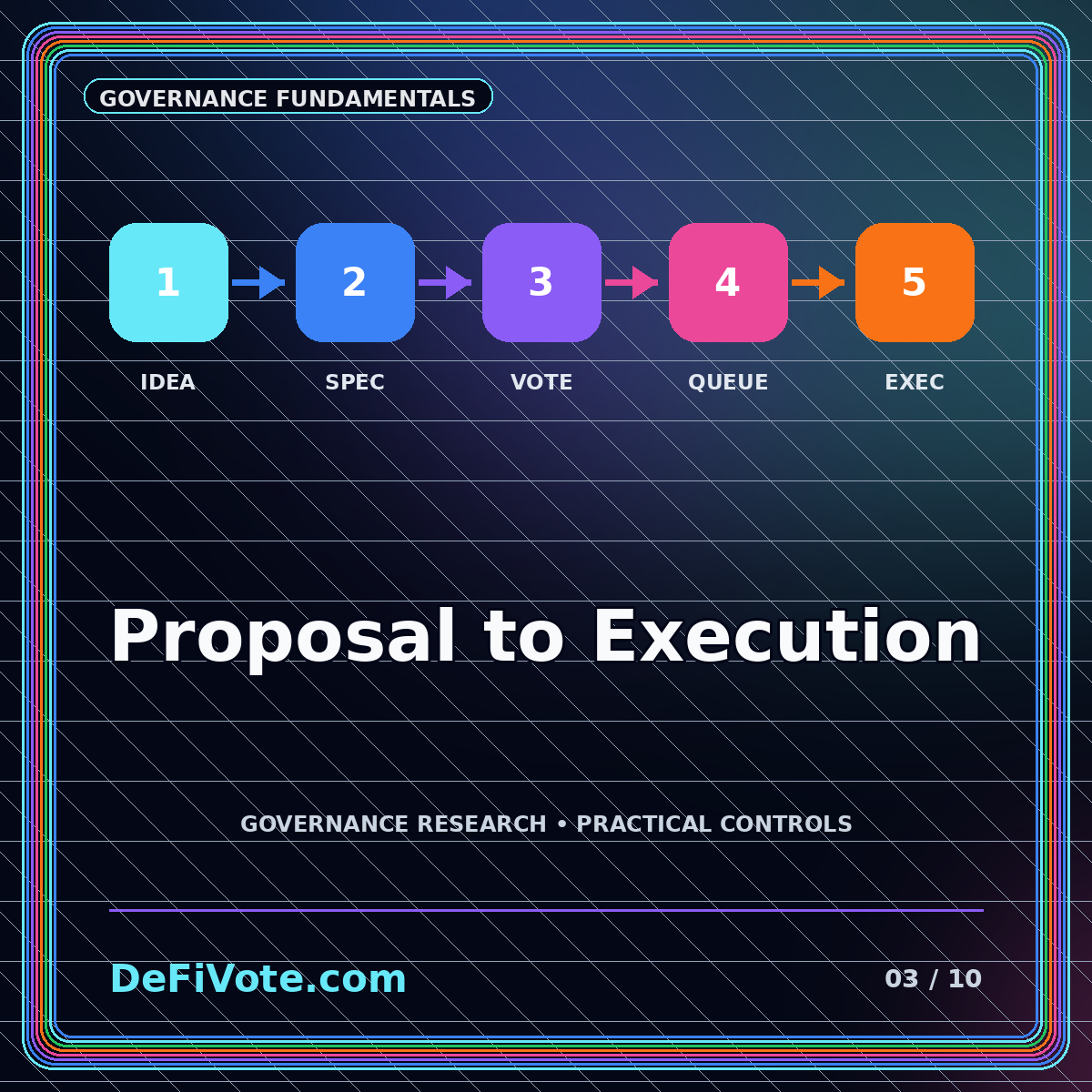
Follow a token-governance proposal through delegation, thresholds, voting, quorum, timelock, execution, and post-vote verification.
Compare cost, trust, auditability, participation, and execution across on-chain, off-chain, and hybrid DAO voting systems.
Understand how DeFi protocols turn community discussion into proposals, votes, executable changes, and accountable follow-through.
Use category and tag archives to move from governance fundamentals into specialized implementation topics.